

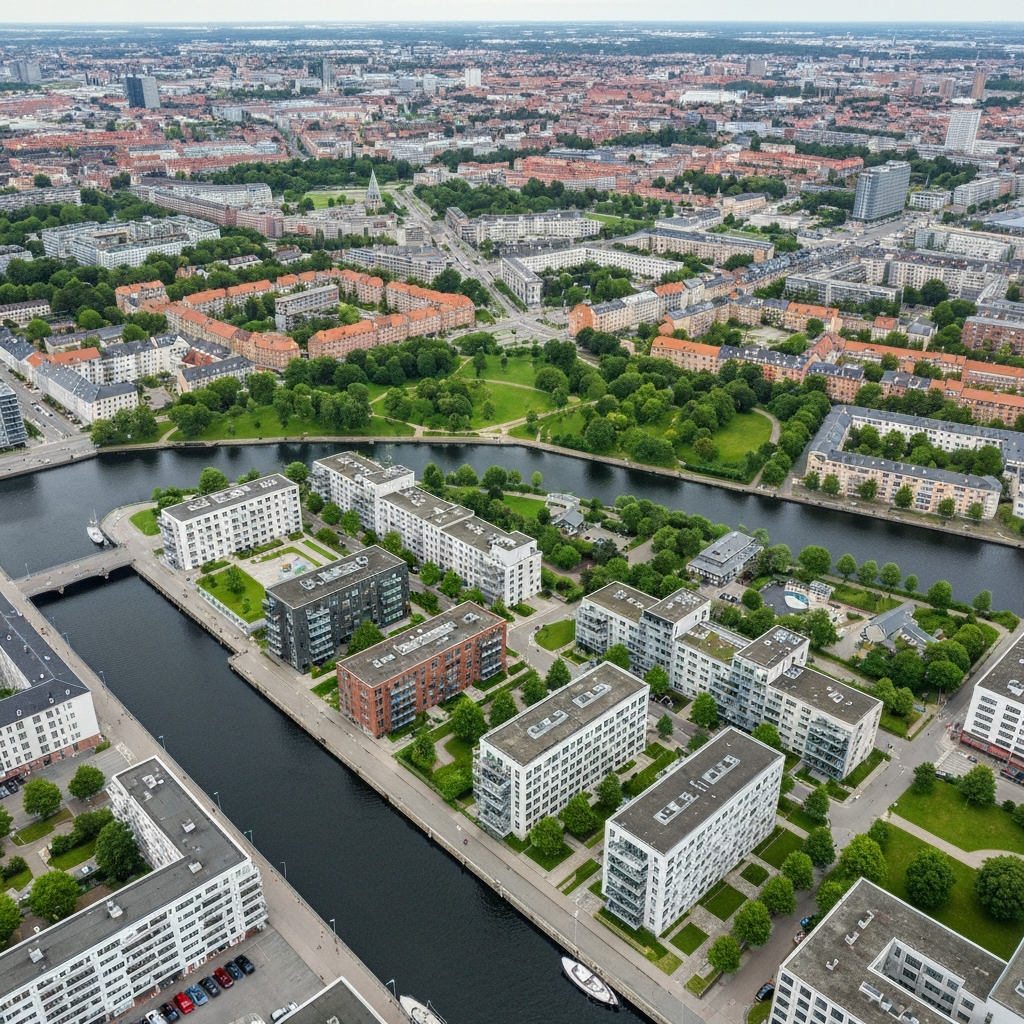
Copenhagen has long been celebrated for its high quality of life, sustainable urban planning, and vibrant community spaces. However, the city’s rapid population growth—expected to reach 700,000 by 2025—poses significant challenges in housing, infrastructure, and maintaining the delicate balance between development and livability.
Housing Challenges and Initiatives
The surge in population has intensified the demand for housing, leading to increased property prices and longer waiting lists for social housing. The municipality faces constraints, as it isn’t legally permitted to build housing directly and often relies on private developers to meet the growing needs. This situation has inadvertently resulted in smaller living spaces and heightened pressures on housing availability. Source
In response, innovative projects like the UN17 Village are emerging. Spearheaded by Urban Partners, this development focuses on creating community-centric living spaces designed to promote social interaction and well-being. The architectural design maximizes access to natural light and incorporates common areas to foster a sense of community, addressing issues like urban loneliness. Source
Climate Resilience and Sustainable Urban Planning
Copenhagen’s commitment to sustainability is evident in its proactive approach to climate resilience. Following historic flooding events, the city has embraced the ‘sponge city’ concept, redesigning streets, squares, and parks to absorb and redirect excess water. This strategy integrates engineering solutions into the urban landscape, enhancing the city’s ability to manage extreme rainfall and adapt to climate change. Source
Furthermore, the city’s Climate Plan 2035 outlines ambitious goals to achieve carbon neutrality. The plan focuses on energy consumption, production, mobility, and city administration initiatives, aiming to combine growth and development with a reduced carbon footprint. Source
Community Engagement and Reporting
Maintaining Copenhagen’s livability also relies on active community engagement. Residents are encouraged to report issues in public areas, such as potholes, broken road signs, or overflowing garbage bins, to the City of Copenhagen. This collaborative approach ensures that the city remains accessible, clean, and safe for all. Source
As Copenhagen continues to grow, balancing development with the preservation of its renowned quality of life remains a priority. Through innovative housing projects, sustainable urban planning, and active community participation, the city strives to meet the challenges of growth while maintaining its commitment to livability and sustainability.