

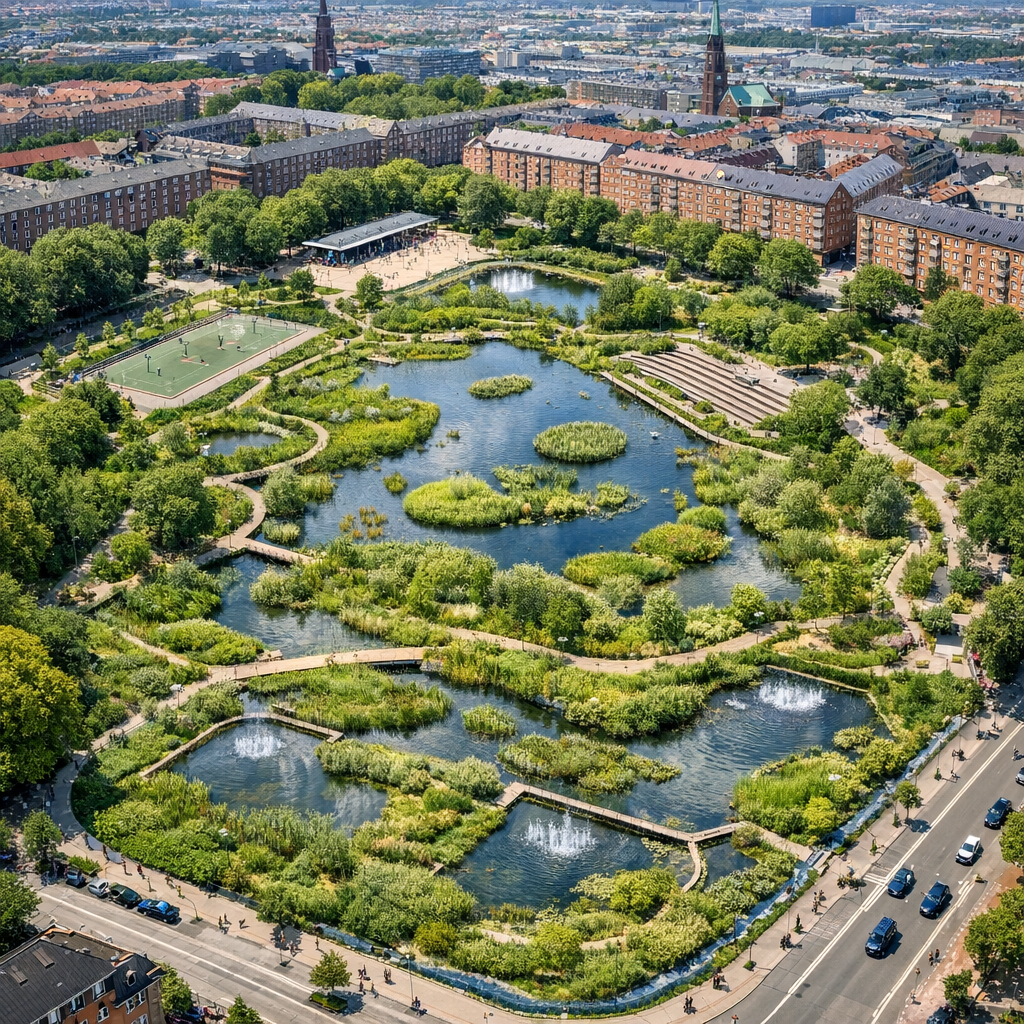
Copenhagen is renowned for its proactive approach to climate adaptation, implementing strategies that not only mitigate environmental challenges but also enhance urban livability. The city’s comprehensive plans address issues such as increased rainfall, rising sea levels, and urban heat, ensuring a resilient future for its residents.
Comprehensive Climate Strategies
The City of Copenhagen has developed the Climate Strategy 2035, aiming to achieve climate positivity by 2035 concerning direct CO₂ emissions within city boundaries. This strategy also targets a 50% reduction in per capita global CO₂ emissions associated with Copenhageners’ consumption by 2035, compared to 2019 levels. These ambitious goals build upon the previous CPH 2025 Climate Plan, reflecting the city’s commitment to sustainable development. [Source: City of Copenhagen]
Innovative Urban Design
To combat the anticipated 30% increase in rainfall by the end of the century, Copenhagen has redesigned urban spaces like Enghaveparken. This park can transform into a massive reservoir during heavy rain, preventing flooding in surrounding areas. Such ‘sponge parks’ exemplify the city’s innovative approach to integrating climate adaptation with urban design. [Source: NPR]
Community Engagement
Recognizing the importance of community involvement, Copenhagen has initiated local climate summits and citizen assemblies. These platforms allow residents to participate in developing and implementing climate adaptation measures, fostering a collective effort towards a sustainable future. [Source: City of Copenhagen]
Looking Ahead
Copenhagen’s climate adaptation efforts serve as a model for cities worldwide. By combining ambitious goals, innovative design, and community engagement, the city is not only addressing current environmental challenges but also enhancing the quality of life for its residents.