

By Oliver Knudsen
In Copenhagen it’s rare to meet someone who doesn’t cycle. It’s as much a part of our identity here as pastries or hygge. Still, the rhythms, surprises and strains of life lived on two wheels are deeply personal—and what I’m learning is that they’re very different depending on whether you’re cycling for joy, for survival, or for belonging.
The Morning Commute: A Collective Ritual
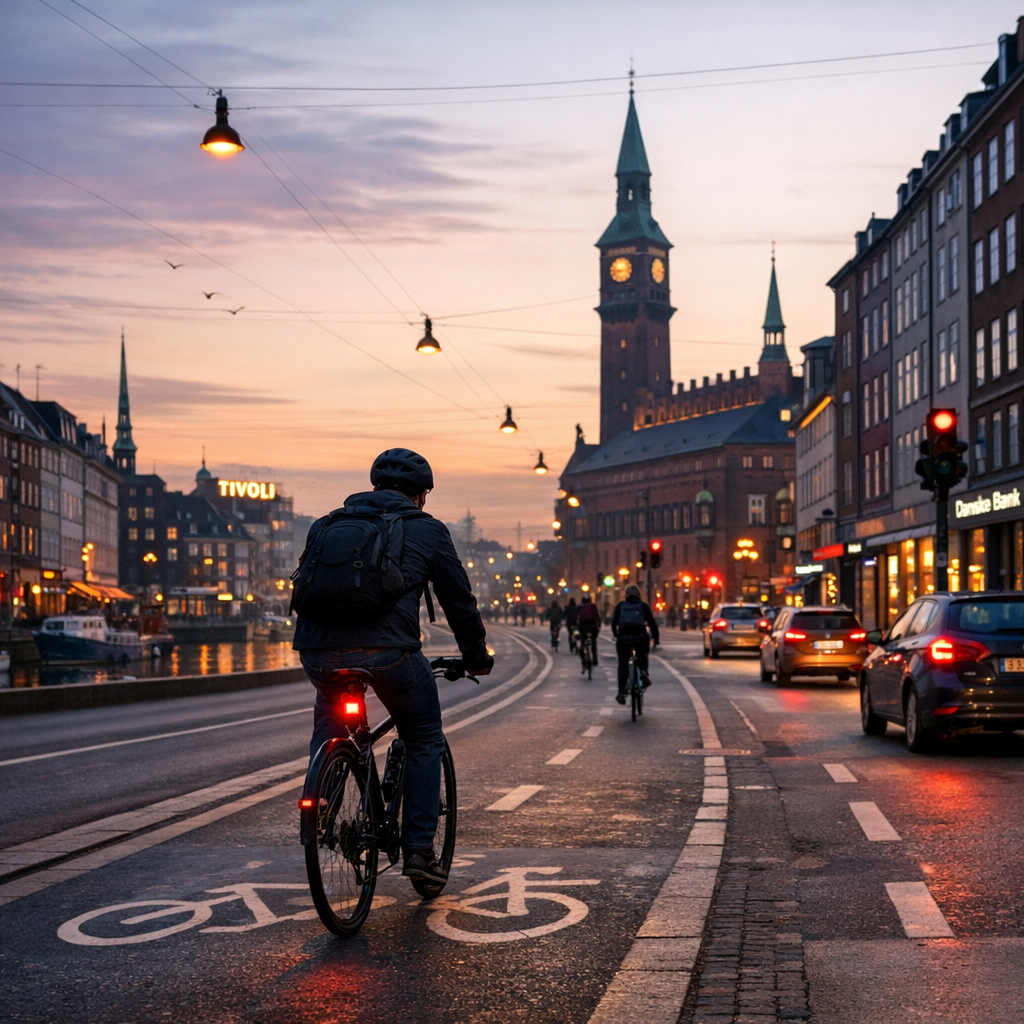
Every weekday dawn, the streets swell with students, parents, seniors—doctors, chefs, social workers—all pedalling toward something. I ride past the river, past the bakers pulling hot bread into the windows, past the playgrounds where children learn to steer. In those moments I feel part of a shared ritual. It’s never lonely, though I often ride alone.
Even when rain lashes or winter’s wind shrieks, the commute remains sacred. Rarely do I see that same spark of endurance and comfort elsewhere. Copenhagen designed its traffic lights and bike paths to sync with 18-20 km/h riders so that when you’re riding with the flow, you catch green lights in succession. It’s invigorating when it works—and deeply frustrating when construction or intersections break the rhythm. But that sense of flow that knits together individual rides into a collective dance—that’s the city’s gift.
Belonging on the Bike
I often think about how cycling builds belonging. There’s a Volvo driver’s envy in the notice that so many of us are outside, breathing cold air or warm sun, and moving with purpose without burning fuel. What we carry on our backs—groceries, kids, dreams—matters. When I cruise through Nørrebro or Christianshavn, I pass people I know or half-know: a mom guiding three children, a carpenter in boots, a friend on their way to rehearsal. Even strangers nod, or lift their chin at green lights, a small acknowledgment that we are together.
Then there are the lanes that feel unsafe: during rush hour a speeding e-cargo bike squeezes past too close; a delivery van idles in a cycle lane; lights out in winter makes visibility precious. These fraying edges matter. They remind me that belonging isn’t just choosing to cycle—it’s being supported by infrastructure, by policing that treats cyclists and pedestrians with respect, by designing the city so everyone’s ride is fair.
Why We Keep Riding
Bike-only households are now a thing, even if still niche. Friends who once borrowed bikes now own rugged city cycles or shiny utility trikes. They do it for cost savings, for fitness, for purpose; many say it helps them feel awake. A rainstorm is not an excuse—it’s an element of life here.
Then there are special rides: caring rides in trishaws for older people unable to cycle themselves. Moments of community when you help someone stranded, pump a tyre, share tips about light reflectors. Moments when cycling isn’t just self-expression, but an act of care.
What Keeps the Culture Alive
- Design that listens: protected lanes, wide and direct routes that don’t force cyclists into absurd detours.
- Policy stretches beyond headlines: winter maintenance, street lighting, traffic enforcement.
- Small kindnesses: stopping for elderly bikers, giving space at crossings, helping tourists figure out signals.
Where We Go from Here
To ride well in Copenhagen is to shape the future of our community. We need to keep calling for safer crossings, better light in winter, clearer rules on mixed traffic. We need to make cycling welcoming for all: parents, seniors, newcomers, those with differing mobility.
But above all, we need to remember that every ride tells a story. When I lock up my bike and step into a warm café, I don’t just feel proud of my two-wheeled journey—I feel part of a tapestry of others who pedal not just to get somewhere, but to belong.