

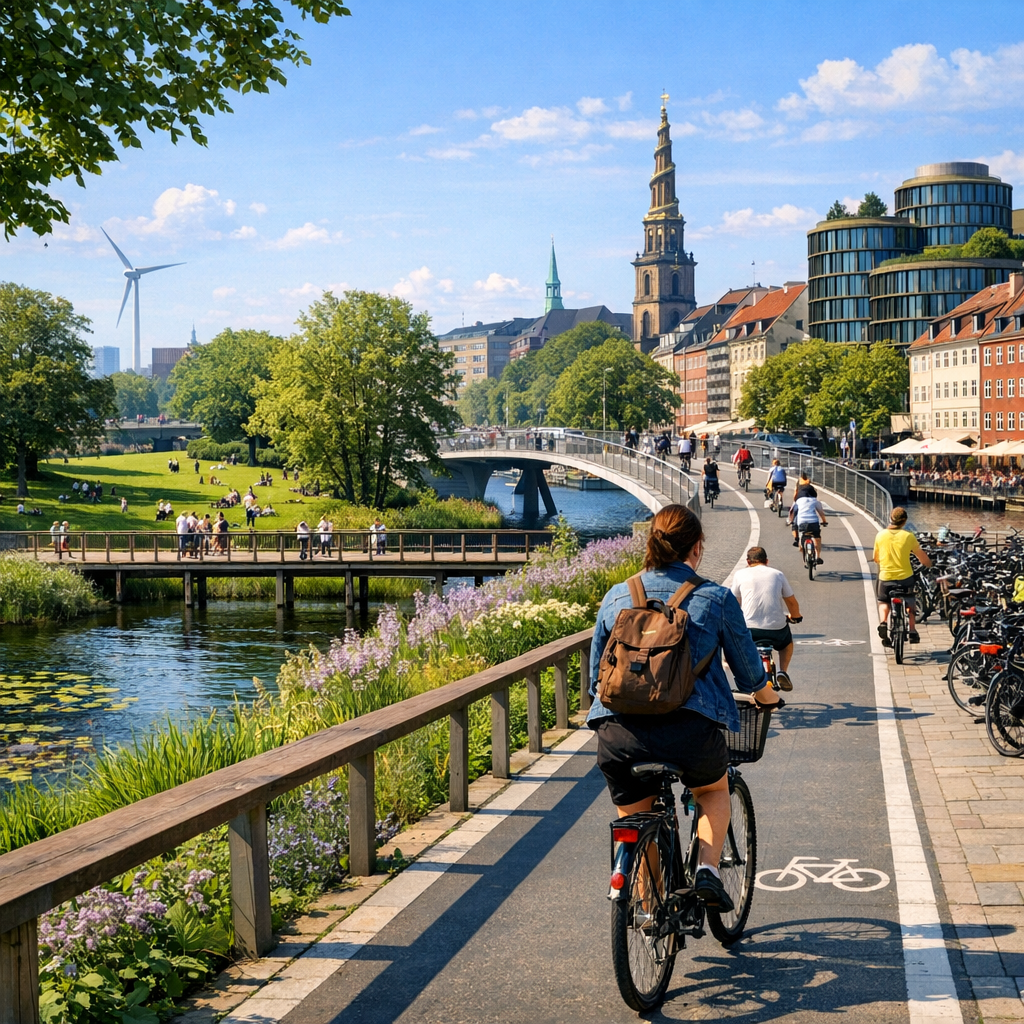
Copenhagen has long been recognized for its dedication to sustainability, implementing a range of initiatives that promote environmental responsibility and enhance the quality of urban life.
Green Transportation
With an extensive network of over 375 kilometers of bike lanes, Copenhagen encourages residents and visitors to explore the city on two wheels. This commitment to cycling not only reduces carbon emissions but also fosters a healthier lifestyle.
Eco-Friendly Architecture
The city has embraced sustainable urban development through projects like Nordhavn, a waterfront neighborhood designed with eco-technologies and green spaces. This area exemplifies how urban planning can integrate environmental considerations to create livable and sustainable communities.
Innovative Waste Management
CopenHill, a waste-to-energy plant topped with a ski slope, illustrates Copenhagen’s innovative approach to combining sustainable energy solutions with recreational spaces. This facility transforms waste into energy while providing residents with unique leisure opportunities.
Climate Adaptation Strategies
In response to increasing rainfall due to climate change, Copenhagen has implemented over 300 climate adaptation projects, including the creation of green spaces that double as reservoirs during heavy rains. These initiatives aim to protect the city from flooding and enhance urban resilience.
Community Engagement
Programs like CopenPay reward residents and visitors for engaging in eco-friendly activities, such as cycling or participating in cleanup efforts, by offering free or discounted access to cultural experiences. This initiative fosters a culture of sustainability and community involvement.
Copenhagen’s comprehensive approach to sustainability serves as a model for cities worldwide, demonstrating that environmental responsibility and urban development can go hand in hand.