

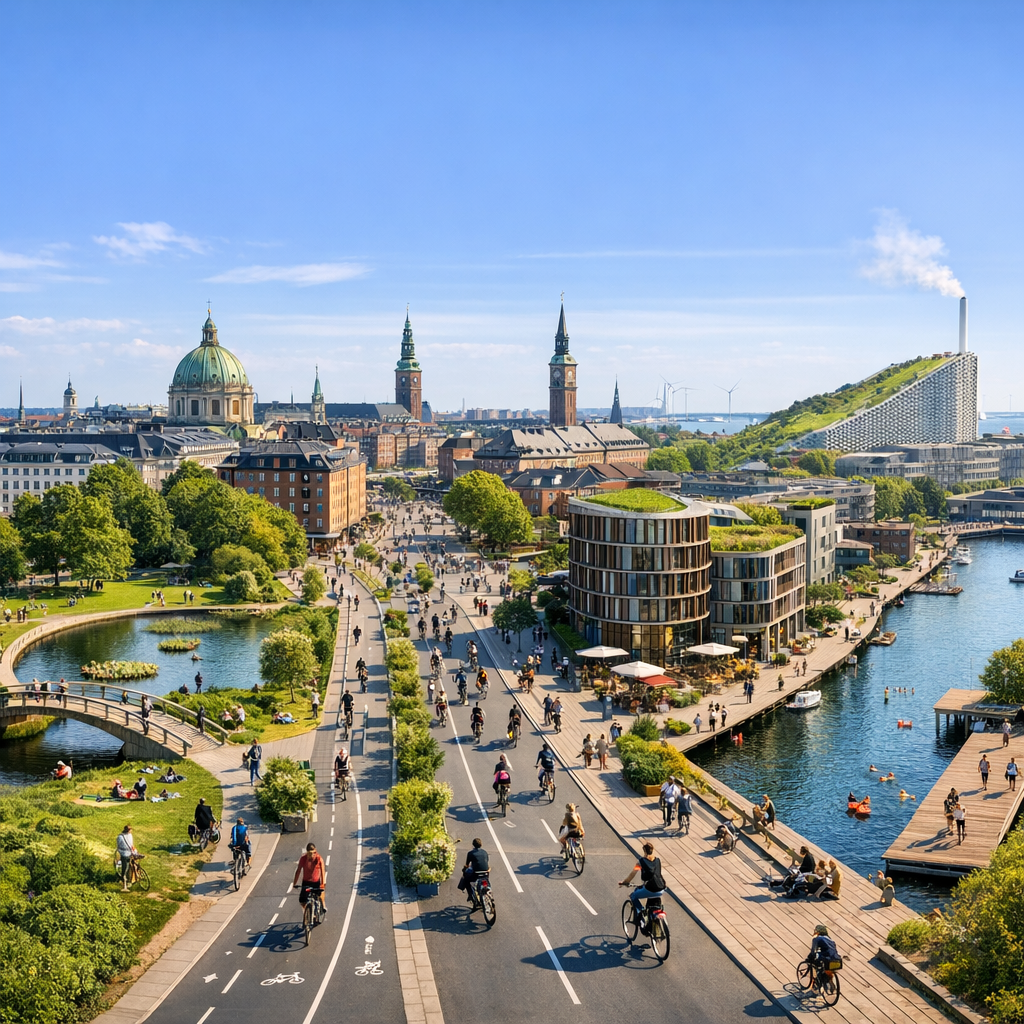
Copenhagen has long been recognized for its commitment to sustainability, blending urban development with environmental responsibility. The city’s ambitious climate policies and innovative projects serve as a model for cities worldwide.
Ambitious Climate Goals
In 2012, Copenhagen introduced the CPH 2025 Climate Plan, aiming to become the world’s first carbon-neutral capital by 2025. This comprehensive plan focuses on reducing CO₂ emissions through energy consumption, energy production, mobility, and city administration initiatives. The plan is implemented in three phases, with evaluations between each to ensure progress and adaptability. Learn more about the CPH 2025 Climate Plan.
Innovative Urban Planning
To address the challenges posed by climate change, Copenhagen has implemented over 300 climate adaptation projects. These include the development of ‘sponge parks’ like Enghaveparken, designed to absorb excess rainwater and prevent flooding. Such initiatives not only mitigate environmental risks but also enhance urban livability. Read more about Copenhagen’s climate adaptation projects.
Encouraging Sustainable Behavior
The city actively promotes sustainable practices among residents and visitors. The CopenPay program rewards eco-friendly actions, such as biking or participating in urban farming, with free or discounted local experiences. This initiative fosters a culture of environmental responsibility and community engagement. Discover how CopenPay encourages sustainable tourism.
Looking Ahead
Building on its successes, Copenhagen has set new targets with the Climate Strategy 2035. The city aims to achieve climate positivity by 2035, further reducing CO₂ emissions and addressing consumption-based emissions. This forward-thinking approach underscores Copenhagen’s dedication to sustainable urban development. Explore the Climate Strategy 2035.
Copenhagen’s holistic approach to sustainability, encompassing ambitious policies, innovative urban planning, and community engagement, positions it as a leader in environmental responsibility. The city’s ongoing efforts offer valuable insights for other urban centers striving for a sustainable future.