

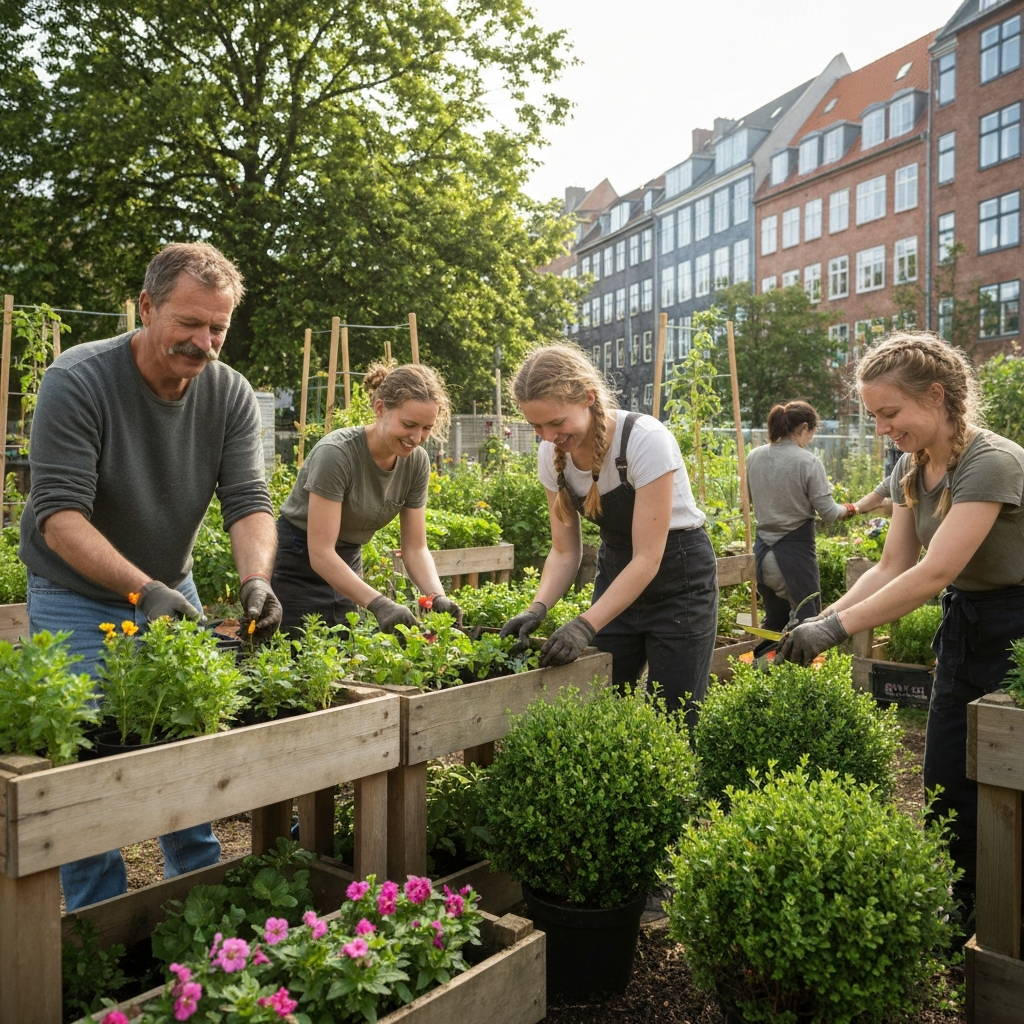
Copenhagen has long been celebrated for its commitment to sustainability and urban livability. A significant aspect of this transformation is the emergence of community-driven initiatives that are turning urban spaces into verdant, sustainable environments.
Øens Have: An Urban Farm Oasis
Located in Refshaleøen, Øens Have is a prime example of urban agriculture flourishing within the city. This urban farm combines a seasonal restaurant with event spaces, aiming to reconnect city dwellers with nature. By employing regenerative and organic farming practices, Øens Have not only produces fresh, organic produce but also fosters community engagement through volunteer days, workshops, and communal meals. The farm’s commitment to sustainability is evident in its organic certification and practices like minimal soil disturbance and crop rotation. [Source: Øens Have]
Tåsinge Plads: Pioneering Climate-Adapted Urban Spaces
Tåsinge Plads stands as Copenhagen’s first climate-adapted urban space. Transformed from an asphalt-covered area into a green oasis, the square manages large volumes of rainwater while providing a communal space for residents. The design incorporates urban wilderness areas that delay flooding and offer drainage solutions, seamlessly blending functionality with recreational opportunities. [Source: Klimakvarter Østerbro]
The Climate Garden: From Parking Lot to Urban Sanctuary
At Grønjordskollegiet in Amager, a former parking lot has been reimagined into ‘The Climate Garden.’ This shared green space supports diverse plant and insect life, is designed for climate adaptation, and utilizes recycled materials from the site. The transformation was driven by the residents’ desire for a vibrant meeting space, highlighting the power of community involvement in urban development. [Source: arki_lab]
Prags Urban Garden: A Model for Sustainable Urban Living
Initiated in 2011, Prags Urban Garden transformed a 900 m² industrial plot into a thriving community garden. Volunteers from the local neighborhood and beyond came together to plant a variety of flora, creating a space for communal meals, workshops, and cultural events. Although the garden closed in 2014, it remains a testament to the impact of community-driven green initiatives in urban settings. [Source: Steen Andersen]
Community Engagement: The Heart of Transformation
These projects underscore the vital role of community engagement in urban transformation. By involving residents in the planning and implementation processes, these initiatives ensure that the resulting spaces meet the needs and desires of the community. This participatory approach not only enhances the success of the projects but also fosters a sense of ownership and pride among residents.
Copenhagen’s green renaissance is a testament to the city’s dedication to sustainability and community involvement. Through initiatives like Øens Have, Tåsinge Plads, The Climate Garden, and Prags Urban Garden, urban spaces are being revitalized into sustainable, communal environments that enhance the quality of life for all residents.