

Copenhagen, the capital of Denmark, experiences a temperate oceanic climate characterized by moderate temperatures and distinct seasons. This climate is influenced by the city’s coastal location and the North Atlantic, resulting in relatively mild conditions throughout the year.
Seasonal Overview
Spring
Spring in Copenhagen brings gradually warming temperatures and longer daylight hours. March often starts with cooler conditions, but by May, average daytime temperatures reach around 15°C (59°F). This season is marked by blooming flora and increased outdoor activities.
Summer
Summers are comfortable, with average highs around 21°C (70°F) in July. The city enjoys long daylight hours, providing ample time for residents and visitors to explore outdoor attractions. Rainfall is moderate, with occasional brief showers.
Autumn
Autumn sees a gradual cooling, with temperatures averaging 12°C (54°F) in September and dropping to around 5°C (41°F) by November. The season is characterized by changing foliage and a mix of sunny and rainy days.
Winter
Winters are cold and mostly cloudy, with average temperatures hovering around 0°C (32°F). Snowfall occurs mainly from late December to early March, though it is often light and interspersed with rain.
Environmental Initiatives
Copenhagen is renowned for its ambitious environmental policies and initiatives aimed at promoting sustainability and combating climate change.
Carbon Neutrality Goal
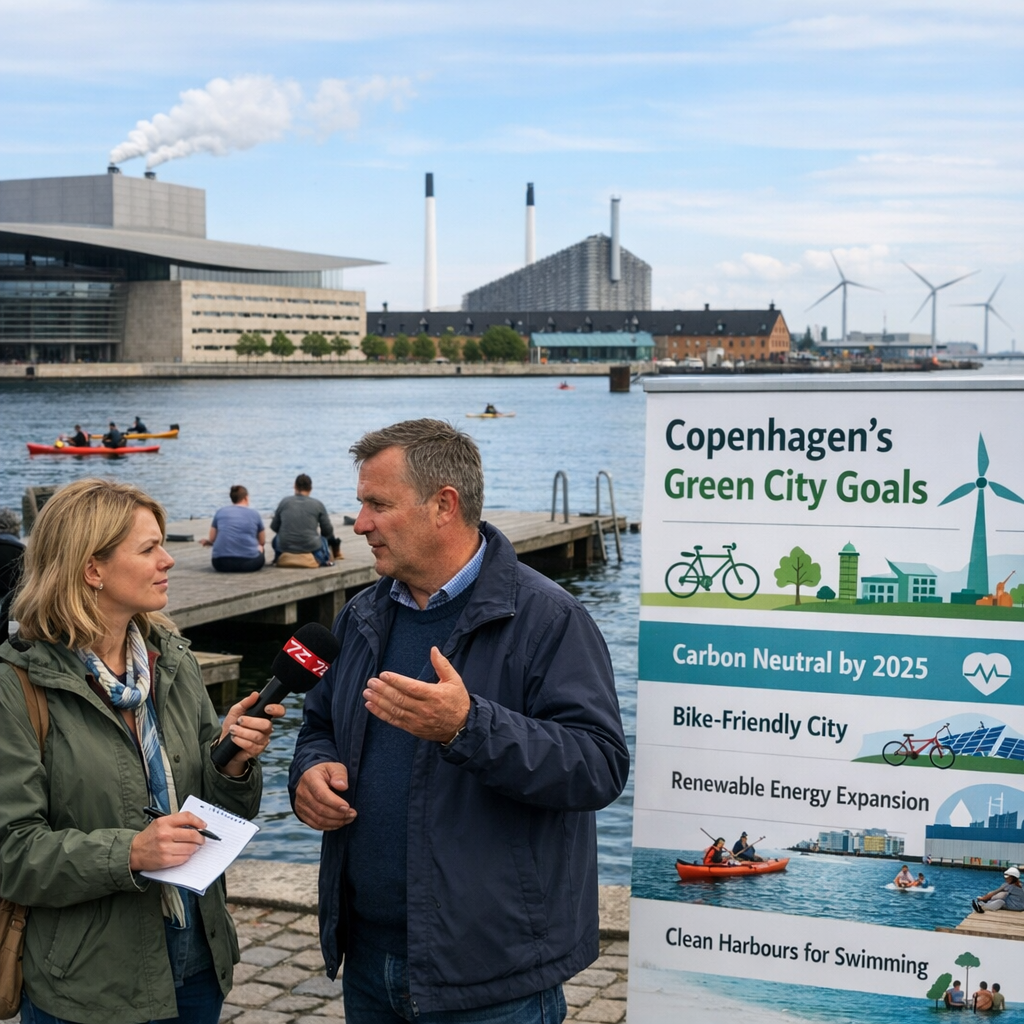
The city has set a goal to become the world’s first carbon-neutral capital by 2025. This objective is pursued through the CPH 2025 Climate Plan, which focuses on four key areas: energy consumption, energy production, mobility, and city administration initiatives. The plan emphasizes reducing CO₂ emissions while maintaining growth and quality of life.
Sustainable Transportation
Copenhagen is often referred to as the world’s first bike city, boasting over 375 km of bike lanes. Cycling is a favored mode of transport, contributing to reduced carbon emissions and promoting a healthier lifestyle.
Green Urban Development
The city integrates sustainable practices into urban planning, creating green spaces and promoting eco-friendly architecture. Initiatives like the CopenPay program reward visitors for engaging in environmentally friendly activities, such as biking or participating in clean-up efforts, with free or discounted local experiences.
Through these efforts, Copenhagen continues to set an example for cities worldwide in balancing urban development with environmental responsibility.